200 to 400 Amp Service Upgrade with Dual Generac Transfer Switches
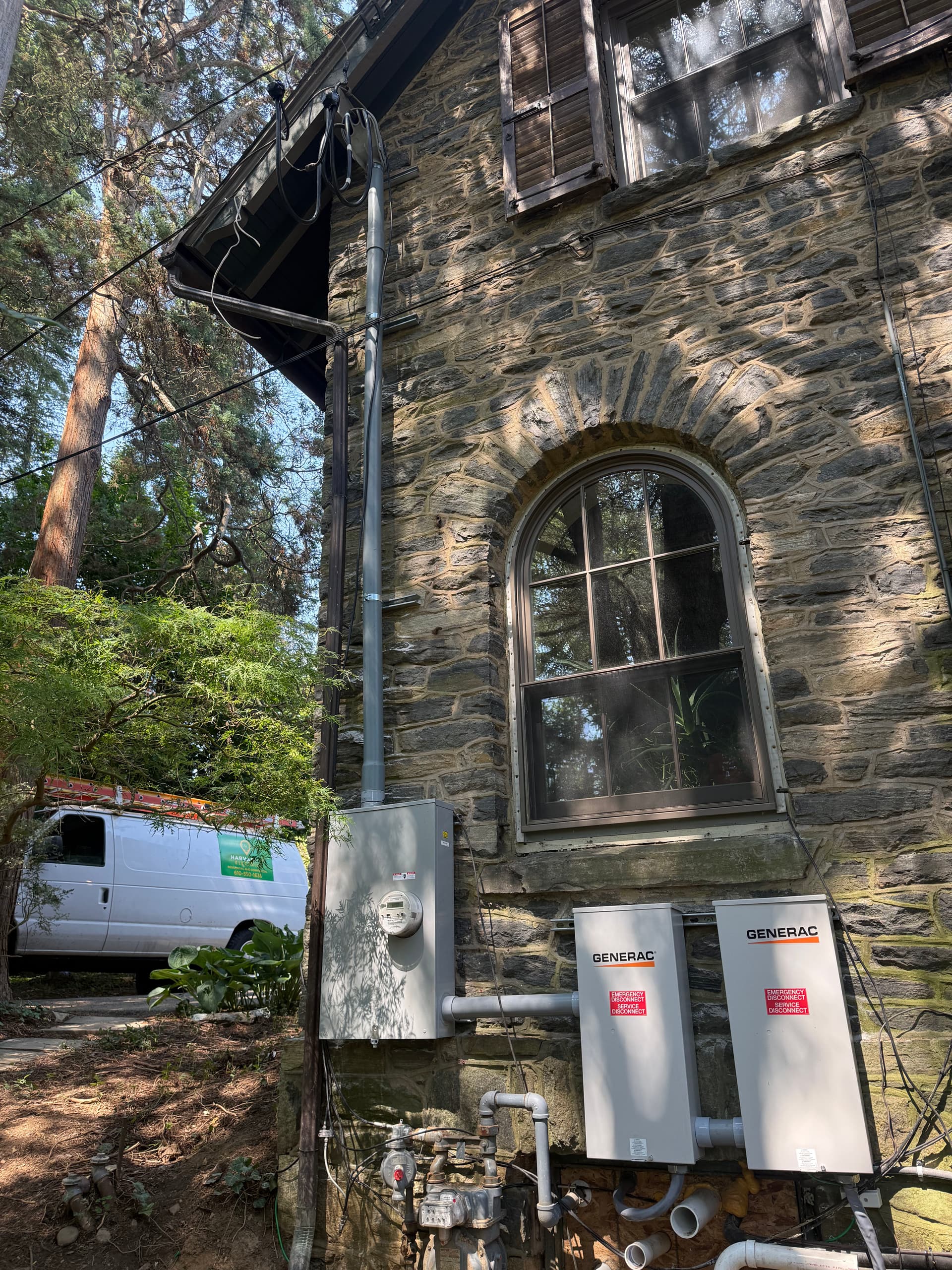
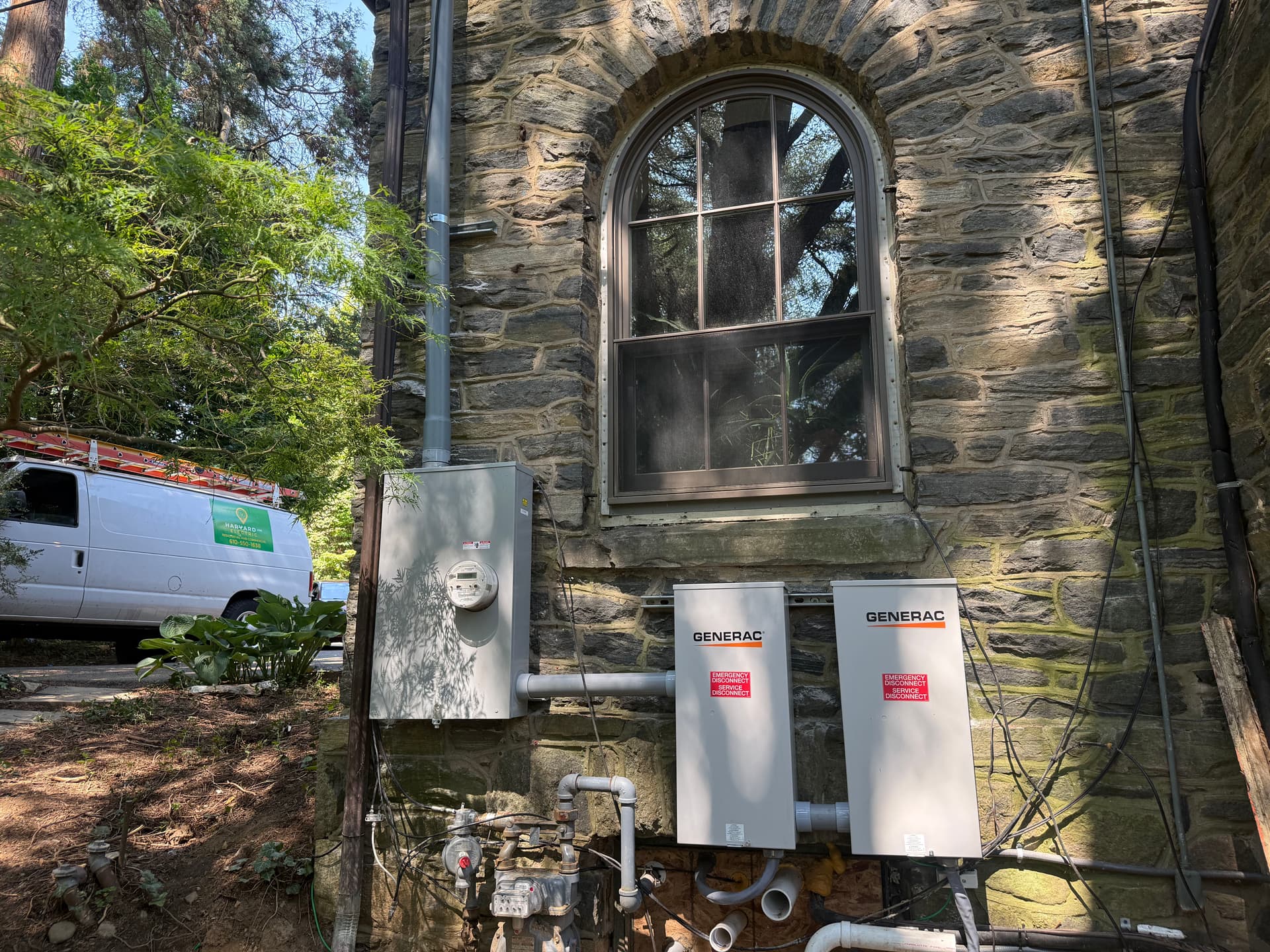
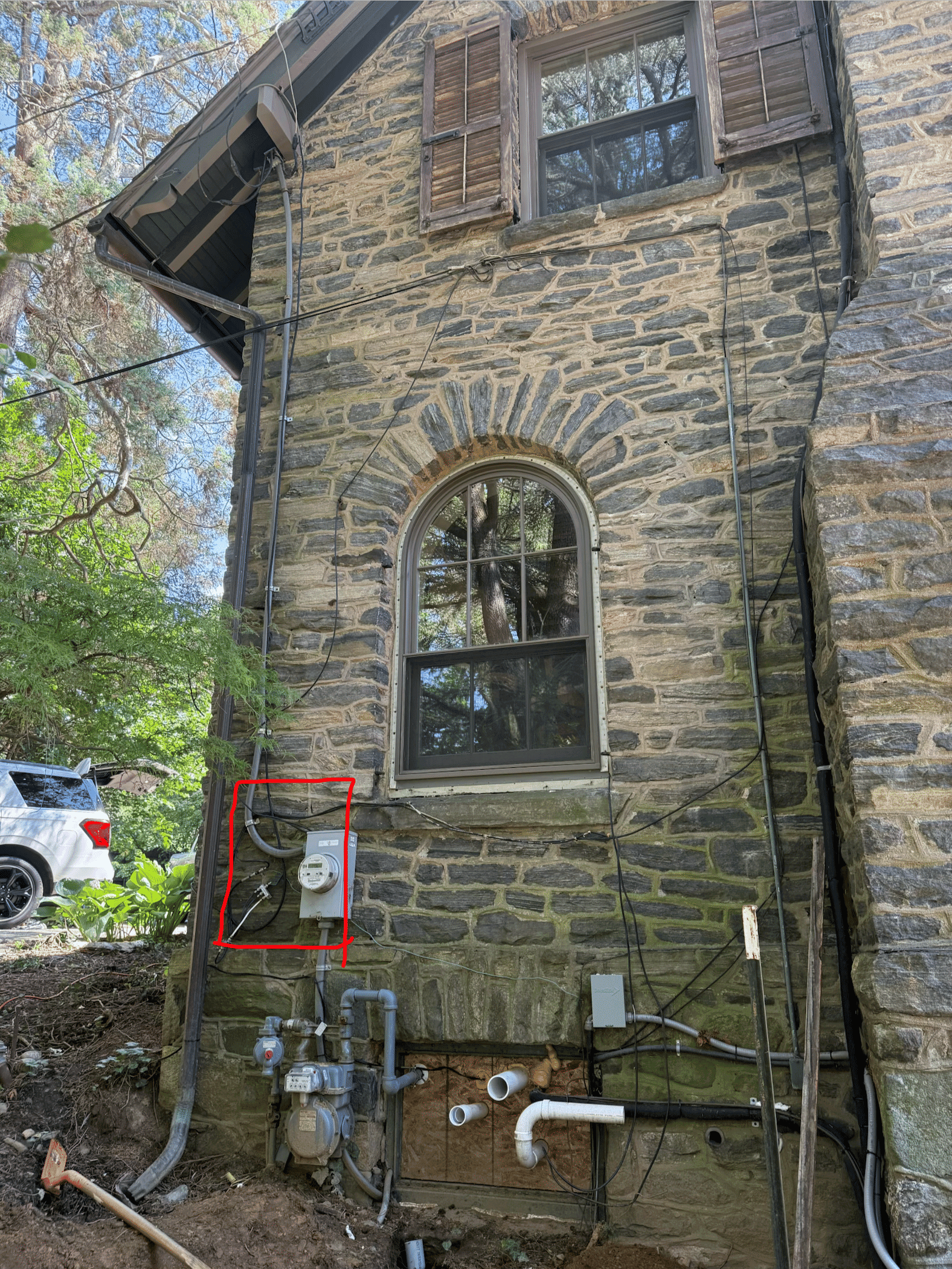
This one had some real challenges baked in from the start. The home is a beautiful old stone structure - and while that looks great, working against uneven granite walls when you're mounting equipment and running conduit is a completely different job than working on a standard framed house. Nothing sits flush. Nothing lines up the way it should. You have to adapt at every step.
Here's what we were working with: a home running on a 200 amp service that had outgrown itself. The homeowner also wanted whole-home backup power, which meant a generator setup that could actually handle the full load. That's where the scope of this job got bigger - and more involved.
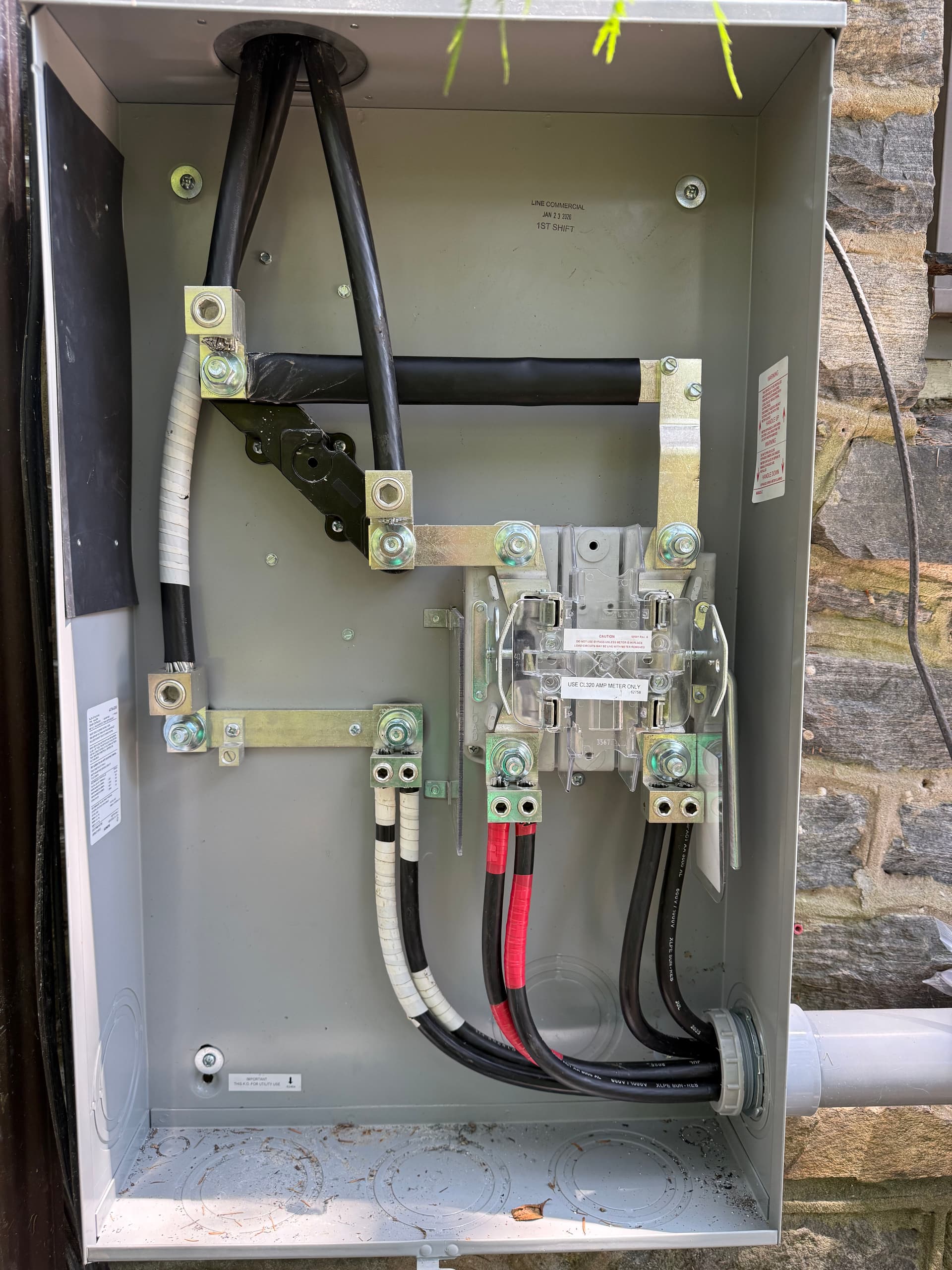
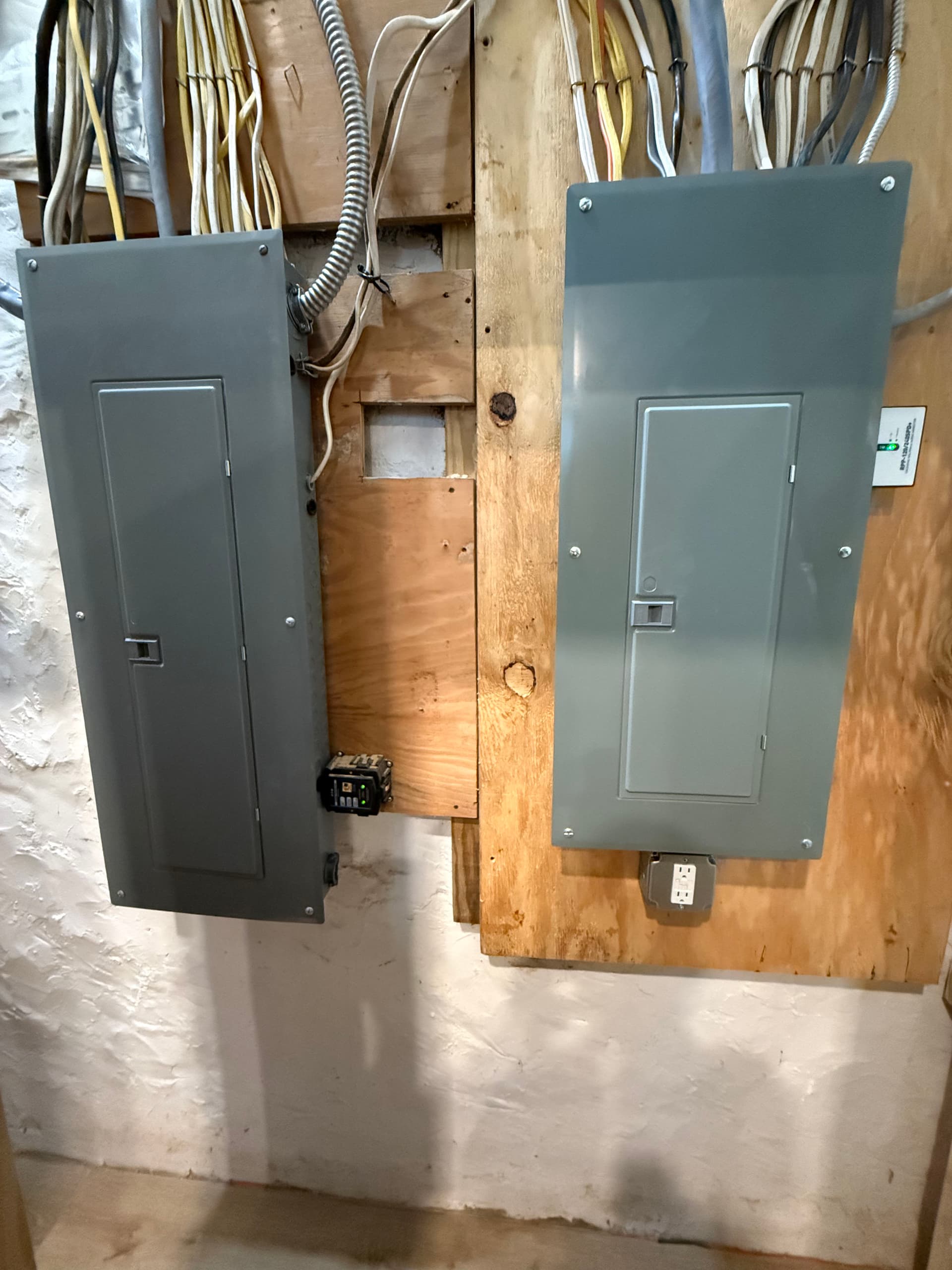
We upgraded the service from 200 amp to a custom 400 amp setup, then added two Generac 200 amp transfer switches mounted side by side on the exterior wall. Inside, we installed two new panels to split the load cleanly. The meter socket wiring inside that new enclosure is laid out tight and organized - heavy conductors landed properly, everything color-coded, nothing sloppy. That's what a 400 amp service done right looks like.
The dual Generac transfer switch setup is worth explaining. When you're running a generator large enough to back up a whole house, one 200 amp transfer switch often isn't enough capacity on its own. Running two in parallel gives you the headroom to handle the full electrical load without pushing either switch beyond its limits. It's a more complex install, but it's the correct way to do it for a home this size.
Jobs like this don't always go smoothly - especially when you're working on a historic stone home with no flat surfaces and tight clearances. But getting it right matters more than getting it done fast. The end result is a home that went from an undersized, single-source setup to a full 400 amp service with completely redundant backup power.